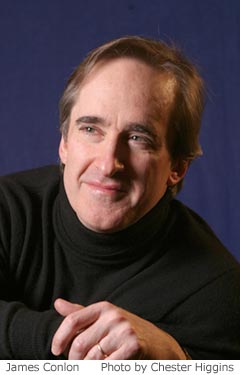
By James Conlon
“Who shall absolve the foulness of their fate…Those doomed, conscripted, unvictorious ones?” - Siegfried Sassoon
After 1945, those who performed, wrote or taught classical music worked in a culture scarred by omissions. These were not of their making, but were part of the legacy of atrocities committed by Nazi Germany. With its racist ideology and systematic suppression particularly, although not exclusively, of Jewish musicians, artists and writers, the Third Reich silenced two generations of composers and, with them, an entire musical heritage. Many, who were murdered in concentration camps, and others, whose freedom and productivity were curtailed, were fated to be forgotten after the war. Their music seemed to have passed with them, lost in endless silence.
By Michael Beckerman
Music with a fraught past is frequently performed, but how should it be presented? Is it correct to say that all fraught pasts are equal - e.g., Beethoven's or Mahler's personal experiences as opposed to Klein's experience in a concentration camp? Reflecting upon recitals of works that depend on the audience's knowledge of historical contexts, we may legitimately wonder whether such recitals offer something more like a history lesson than a musical experience. Jumping back and forth between history and aesthetics is a common practice, but are the two worlds mutually exclusive, or can they coexist to create powerful experiences? And if they can, in what way? Must programs that in some way engage the fraught past be entirely devoted to a particular time, place and condition, or are there more subtle ways to program?